We Hear what your Machines Don't Say.
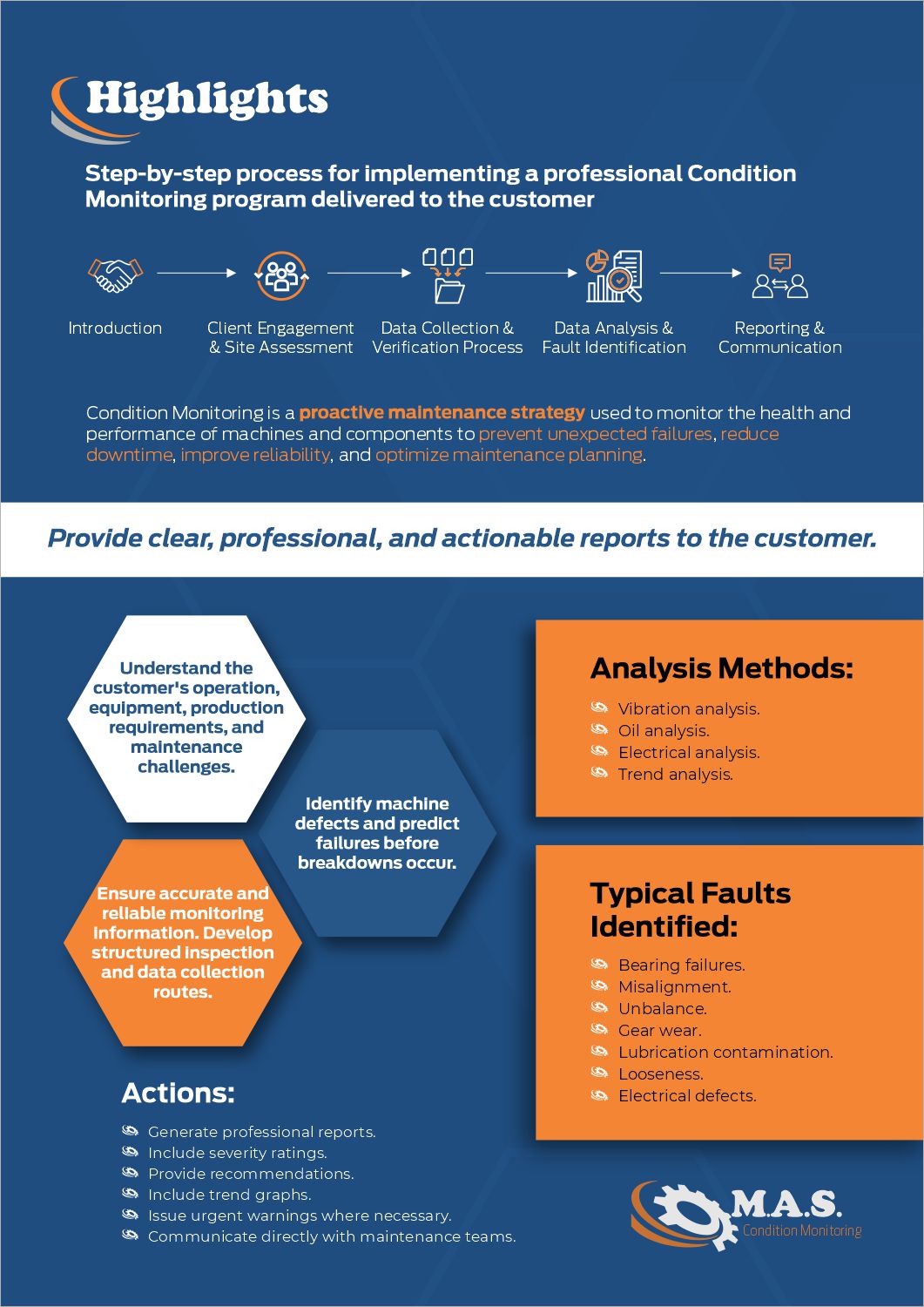
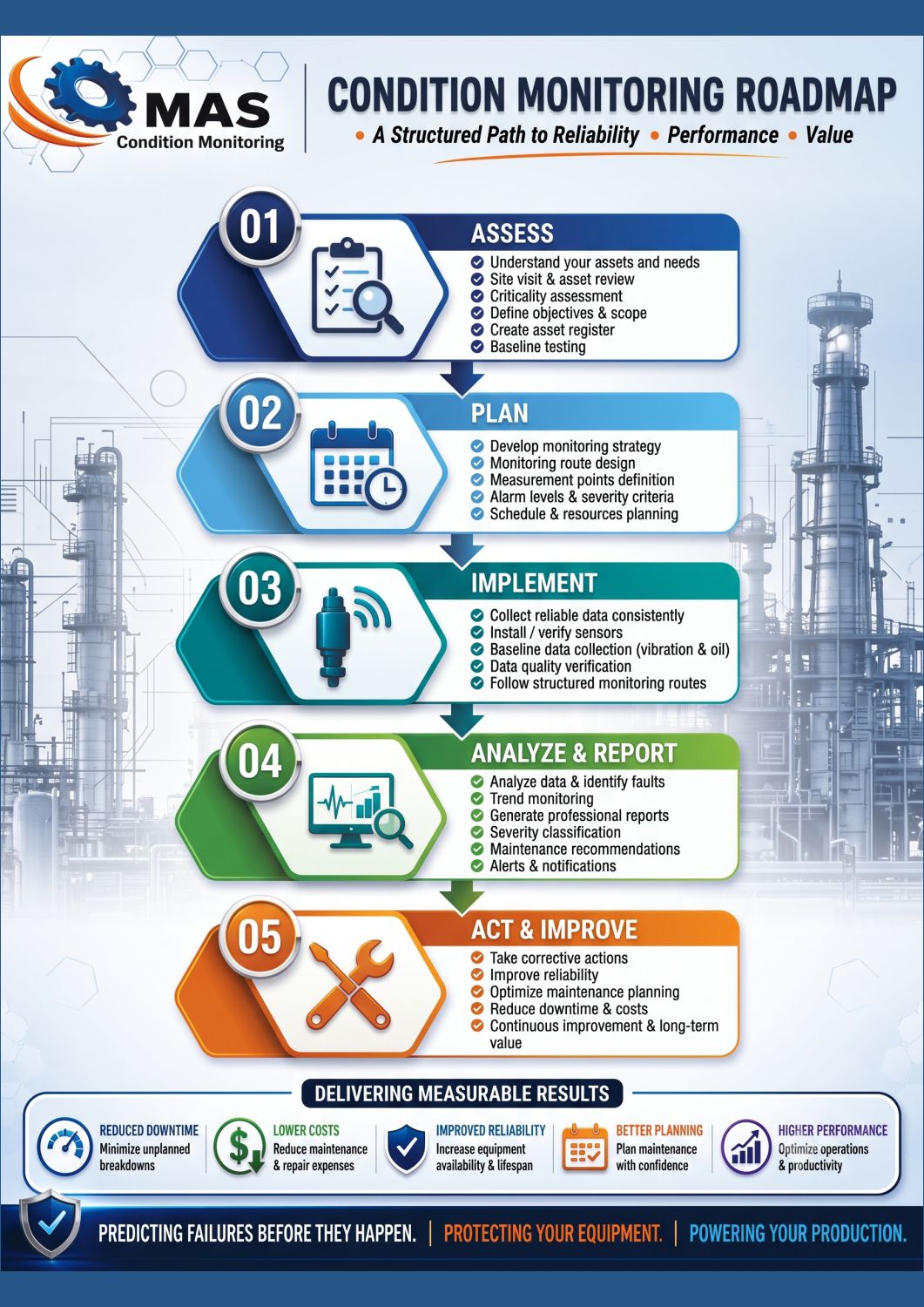
M.A.S. Condition Monitoring has been operating in the condition monitoring field for more than 30 years, providing professional predictive and preventative maintenance services.
Our services are designed to enhance equipment reliability, reduce maintenance costs, and minimize unplanned downtime.



Vibration Analysis
The Industrial Stethoscope: Decoding Vibration Analysis in Predictive Maintenance
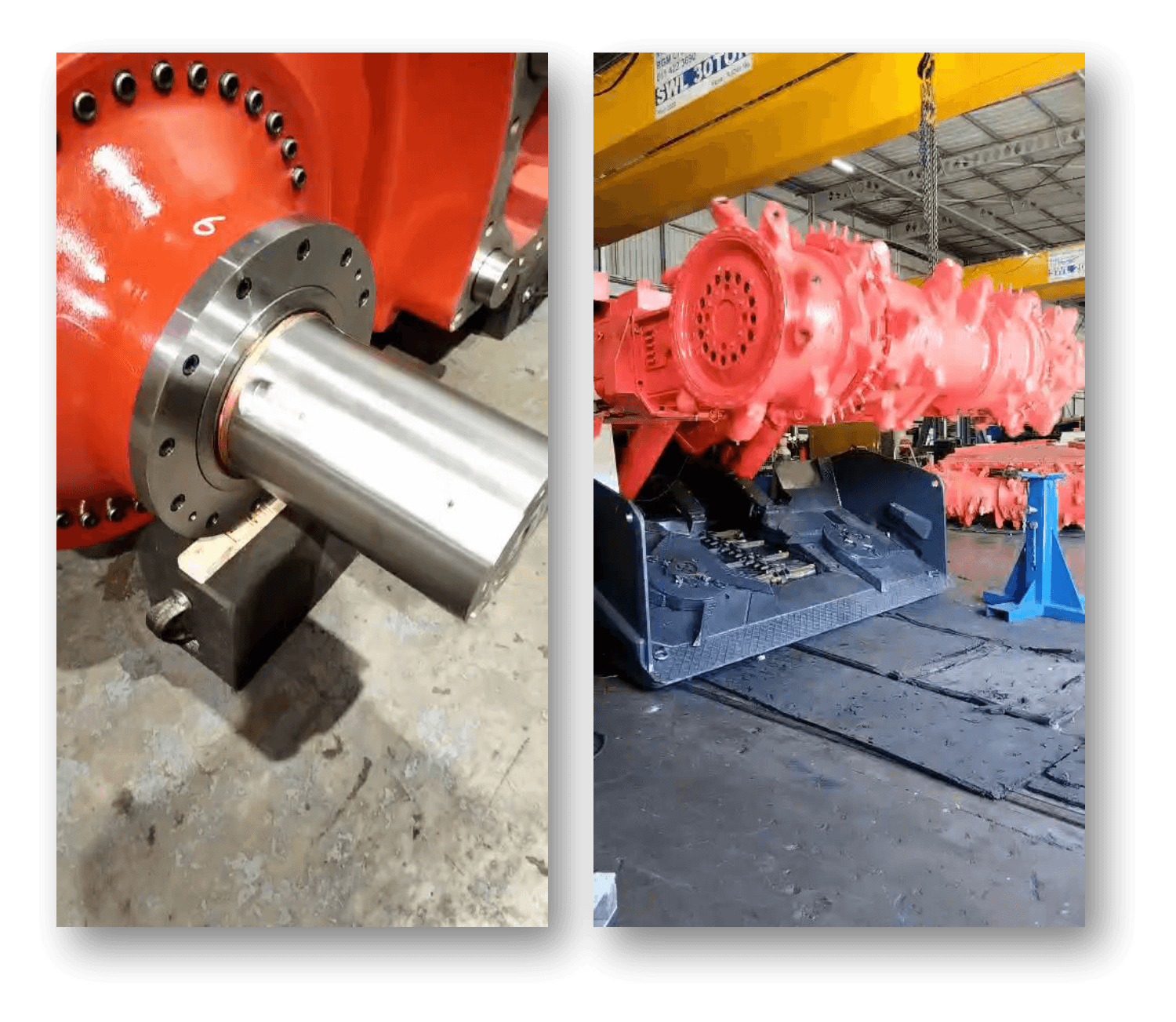
In heavy industries like mining, power generation, and manufacturing, rotating machinery forms the pulse of production. From massive ventilation fans and slurry pumps to the critical cutter head gearboxes on underground continuous miners, asset reliability is everything.
When a machine breaks down unexpectedly, production stalls, repair costs skyrocket, and safety risks escalate. To prevent these catastrophic failures, forward-thinking operations rely on two critical, non-destructive tools:
Vibration Analysis Together, these practices act as an industrial stethoscope, allowing condition monitoring teams to diagnose mechanical health issues inside a machine while it is running, and apply precision corrective adjustments directly on-site.
How Vibration Analysis Detects Faults Early:
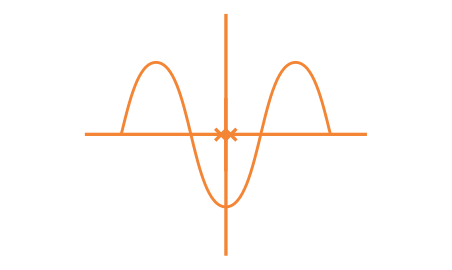
Amplitude (The Severity)
This measures how much the machine is moving. Spikes in displacement, velocity, or acceleration indicate that destructive forces are growing inside the machine casing.

Frequency (The Root Cause)
This measures how fast the machine is moving back and forth (cycles per second, or Hz). Mechanical faults recur at predictable, mathematically bound speeds. By isolating the exact frequency of a vibration spike, analysts can pinpoint the failing component
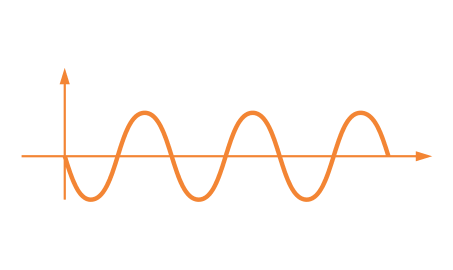
Phase (The Motion Direction)
This measures the relative timing of the movement between two distinct points on the machine. Phase analysis allows technicians to distinguish between closely related faults that share similar frequencies
Common Mechanical Issues Isolated by Vibration Analysis:

Unbalance:
A heavy radial vibration occurring precisely at 1x the rotational speed of the shaft, signaling uneven weight distribution on a rotor or fan impeller.

Misalignment:
Marked by high axial vibrations (vibration along the direction of the shaft) occurring at 1x or 2x run speed, revealing that coupled shafts are not perfectly co-axial.

Mechanical Looseness:
Appears as multiple structural harmonics (2x, 3x, 4x, etc.), showing that foundation bolts, structural base plates, or internal bearing clearances have degraded.

Early-Stage Bearing & Gear Deficiencies:
Microscopic pitting on bearing races or hairline cracks on gear teeth emit high-frequency impact waves. These are caught using advanced acceleration enveloping long before traditional thermal indicators flag a problem.
Monitor. Analyse. Optimise.

Motor Circuit Analysis (MCA) Power Quality
Meg ohm meter insulation testing primarily detects faultsto ground. Since only a portion of motor winding failures begin as ground faults, many developing issues may remain undetected when relying on this method alone.
Additionally, surge testing requires the application of high voltages, which can potentially be destructive to motor insulation. For this reason, it is often considered unsuitable for troubleshooting and true Predictive maintenance, where non-destructive testing methods are preferred. This testing approach can be applied to AC induction motors, generators, rotors, DC motors, and supply cable circuits.
Power and energy monitoring is used to measure and record the electrical consumption of installations, enabling improved energy efficiency and reduced operating costs.
By analysing power usage and network quality, potential issues and inefficiencies can be identified and addressed proactively
Motor windings are typically
evaluated for:
- Resistance imbalance
- Impedance imbalance
- Inductance imbalance
- Current-to-frequency (I/F) ratio
- Phase angle
- Leakage to ground
- Power and Energy Monitoring
Key features include:
- 4 voltage channels and 3 current channels
- Triple digital display for simultaneous parameter viewing
- Suitable for single-phase, split-phase, and three-phase installations
- Electrical network quality analysis
- Harmonic recording up to the 50th order with phase indication
- Data recording to an SD card for further analysis
Oil Analysis
Oil analysis is a routine yet critical practice used to assess lubricant condition, contamination levels, and machine wear. Its primary purpose is to ensure that lubricated equipment is operating as expected and within optimal parameters.
When abnormal conditions or deviations are detected through oil analysis, timely action can be taken to address the root cause or mitigate potential failures—helping to prevent unplanned downtime and extend asset life.
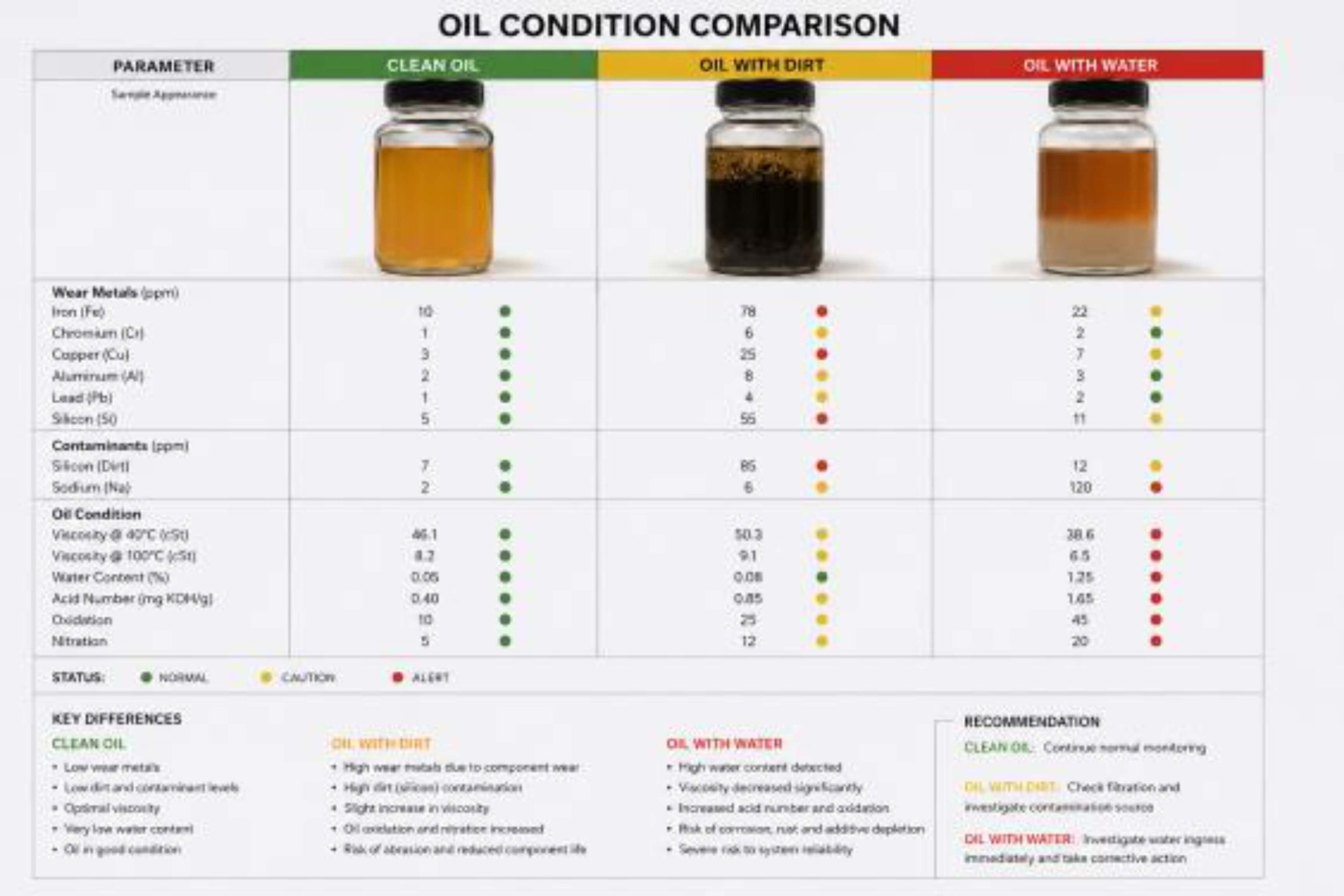
Why Perform Oil Analysis?

1. Fluid Properties
Focuses on identifying the oil’s current physical and chemical state, such as viscosity, oxidation, and additive condition. This helps determine whether the oil is still fit for service.

2. Contamination
Detects the presence of destructiven contaminants such as dirt, water, fuel dilution, or coolant. These contaminants can significantly reduce lubrication performance and accelerate equipment wear.

3. Wear Debris
Determines the presence and identification of particles produced as a result of mechanical wear, corrosion, or other machine surface degradation. This helps identify developing equipment faults before failure occurs.

Thermal
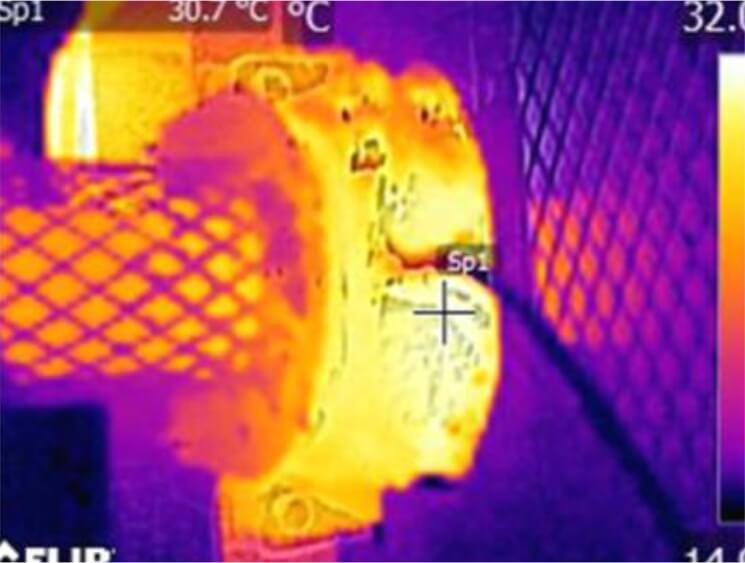
Infrared Inspection
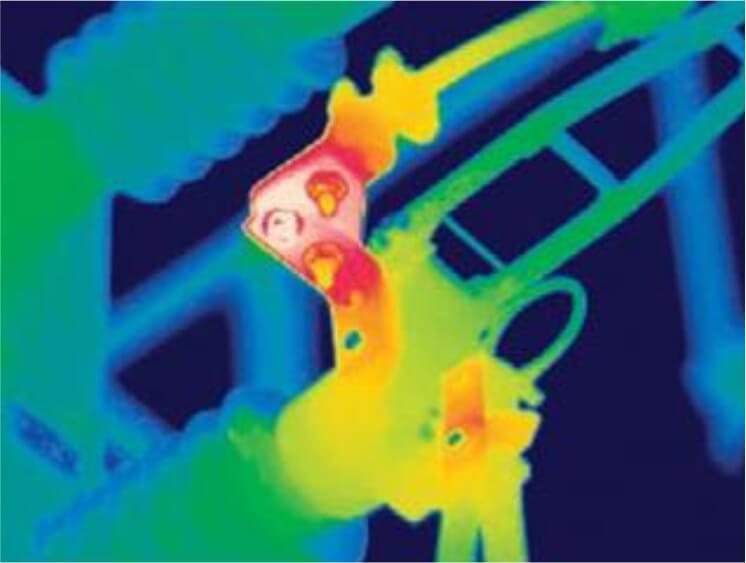
Infrared inspection is a non-invasive technique used to identify and diagnose faults in mechanical and electrical systems without interrupting production. This enables maintenance teams to plan preventative actions, reducing the risk of unexpected downtime, minimizing repair costs, and helping prevent potential electrical fires
Infrared imaging iscommonly used to detect :
- Faulty, loose, or overheating electrical connections and overheated bearings
- Overloaded circuits and unbalanced electrical phases
- Underrated cables, contactors, and circuit breakers
- Low oil levels in transformers
- Misaligned couplings and V-belts
- Blockages in cooling water pipes
Ultrasound
For both hydraulic power packs and pulley systems, ultrasound is an invaluable predictivemaintenance technology. It excels at detecting lubrication problems, bearing defects, cavitation, aeration, mechanical looseness, and belt alignment issues at their earliest stages. When integrated with vibration analysis, thermography, and oil analysis, ultrasound forms a comprehensive condition monitoring program that improves reliability, reduces maintenance costs, and minimizes unplanned downtime—particularly in demanding industries such as mining, manufacturing, and material handling.
Pulley Bearing Lubrication
Using ultrasound-guided lubrication on pulley bearings allows technicians to determine precisely when and how much grease should be added.
- Elimination of calendar-based lubrication schedules.
- Prevention of over-greasing.
- Reduced bearing temperatures.
- Extended service intervals.
Detecting Mechanical Looseness
Loose pulleys, damaged keys, or worn shafts create impact events that produce intermittent ultrasonic signals.
- Loose mounting bolts.
- Worn keyways.
- Shaft movement.
- Structural looseness.
- These defects can be
corrected before they escalate into major failures
Warranty Claims
At MAS Condition Monitoring, we stand firmly behind the accuracy of our diagnostics, the quality of our specialized sampling equipment, and the reliability of our technical services. To ensure your operation maintains maximum machine uptime with complete peace of mind, we offer a comprehensive service and product warranty on all our condition monitoring solutions.
If any service, component, or technical report fails to meet our stringent industry standards or your contractual specifications, we pledge to investigate, rectify, and resolve the matter swiftly under our formal warranty program
About M.A.S Conditioning
M.A.S. Condition Monitoring has been operating in the condition monitoring field for more than 30 years, providing professional predictive and preventative maintenance services. Our services are designed to enhance equipment reliability, reduce maintenance costs, and minimize unplanned downtime.
Key Benefits Include:
- Reduction of downtime and maintenance costs
- Detection and trending of increasing vibration levels
- Monitoring of excess vibration in rotating equipment
- Improved reliability of critical assets
- Early detection of bearing failures
- Identification of leaking seals, shaft breakage, and coupling wear
- Oil analysis to assess lubricant condition and machine health
- Verification of safety compliance when commissioning new equipment
- Support for effective preventive maintenance programmed
- Real-time scanning capabilities
- Immediate on-site feedback following inspections
- Comprehensive exception reports issued after each inspection
This structured approach enables early fault detection and supports informed maintenance decisions, helping to prevent costly equipment failures and production losses.
Meet Our Team

Geraldine van Tonder
Administrator & HR
Manage daily office operations & administrative task. Coordinate training, schedules & development. Oversee payroll and HR records. Ensure compliance with company policies & procedures.

Shaun van Tonder
Manager & Vibration Analyst
Leads the team with over 26 years of experience in condition monitoring and reliability engineering. Ensures high-quality service with expertise in machinery diagnostics, fault detection, and trend analysis.

Martin Appelcryn
Administrator & Coordinator
Manage daily office operations & administrative task. Maintain documentation, records and reporting. Manage onboarding processes. Assist management in planning & execution of initiatives.

Virginia Mangatha Masilela
General Worker & Office Support
Responsible for creating a welcoming and organized working environment while supporting both operational and administrative tasks within the company.

Donovan du Plooy
Data Technician
Supporting mining & industrial operations through professional condition monitoring services. Capturing & managing condition data, while following strict safety & operational standards, he help improve equipment reliability, reduce downtime. Assisting with fault finding.

Pieter Williem Pienaar
Data Technician
Supporting mining & industrial operations through professional condition monitoring services. Capturing & managing condition data, while following strict safety & operational standards, he help improve equipment reliability, reduce downtime. Assisting with fault finding.
Contact Us
Office: +27(0) 13 245 1286
Email: mas@mweb.co.za
Shaun van Tonder: +27(0)72 970 6447
Geraldine van Tonder: +27(0)72 559 0852